Trending...
- Yoga Retreats, Ecstatic Dance & Spiritual App launched
- New Book Warring From the Standpoint of the Throne Room Calls Believers to Pray From Victory
- 46th International Symposium On Forecasting – Dates, Venue And Speakers Announced
U.S. Congressional Candidate Peter Coe Verbica Explains How California's Punitive Tax Structure Is Driving Consumers — and Revenue — Out of the State
BAY AREA, Calif. & SANTA CRUZ, Calif. & MONTEREY, Calif. & SAN LUIS OBISPO, Calif. - PennZone -- Have you ever met someone who moved away from California simply because of DMV fees? I have — and it's not hard to see why. Depending on the county, registration fees on a $60,000 vehicle can approach $940 (and that's before sales taxes, dealer fees, and mandatory add-ons).
For a family living paycheck-to-paycheck, that's not a minor nuisance. If a household owns three vehicles, their annual DMV burden alone could exceed a month's rent in many parts of the country.
And that's just one piece of the puzzle.
Californians already face the nation's highest gasoline taxes, some of the highest base prices due to reformulated fuel requirements, and a regulatory climate that raises the cost of nearly everything involved in transportation. But none of these are the real barrier that stops families, retirees, gig workers, and small business owners from buying a new car.
The real stumbling block — the one that freezes the entire purchase decision — is California's sales tax system.
I drive a Lincoln MKZ Hybrid with 130,000 miles on it. It has been a faithful companion through campaigns, commutes, and countless meetings. By any reasonable measure, I could justify buying a new vehicle. But I won't — not in California's current policy environment. And I'm not alone. Across our state, families, retirees, gig workers, and small business owners are quietly making the same decision: not to buy.
Why? Because California has created one of the most punitive cost structures for vehicle ownership in the nation. What used to be a straightforward purchase has become an intricate dance with sales taxes, registration fees, regulatory hurdles, and "use-tax" traps that hit honest consumers with a bill they never saw coming.
The "Punishment" for Buying a Car
Let's be candid: California has turned new vehicles — especially modest luxury or hybrid models — into a tax event rather than a transportation decision.
More on The PennZone
When a consumer buys a car in California, they simultaneously trigger:
That's not "supporting green transportation." That's discouraging mobility.
The Absurdity of Deterring Responsible Buyers
In my case, I considered upgrading. As a candidate for U.S. Congress, I drive thousands of miles across Santa Clara, Santa Cruz, Monterey, and San Luis Obispo counties. A newer, fresher vehicle would be a rational choice.
But I chose not to buy one — and not because I lack the means.
My MKZ Hybrid is running beautifully. It should easily reach 180,000 to 200,000 miles. Even if the hybrid battery eventually needs replacement — an estimated $3,000–$4,000 expense — that is dramatically cheaper and more practical than handing the State of California an additional $8,000+ in taxes and fees simply for choosing to upgrade responsibly.
This isn't frugality. It's rational behavior in the face of irrational government incentives.
The Deadweight Loss: When Taxes Become So High They Reduce Revenue
Classical economics teaches us about deadweight loss — the idea that when taxes or costs become excessively high, individuals simply stop buying. Everyone loses:
Walk into a dealership anywhere from Los Gatos to Salinas and ask managers about foot traffic. Ask them about the slowdown. Ask them how many qualified buyers are delaying purchases purely due to the cost structure created in Sacramento.
California's policies don't just hurt wealthy buyers; they hurt the middle class, working families, car dealerships, union mechanics, and local tax bases. It's a perverse incentive structure that tells consumers:
More on The PennZone
"If you're smart, you won't buy here."
And many are listening.
The Ripple Effect on Local Dealerships
Dealerships are often multigenerational family businesses. They employ:
This is not environmental policy.
This is not consumer protection.
This is a politically engineered choke point on mobility and commerce.
When Government Becomes the Barrier, Not the Bridge
A government should encourage responsible purchasing — not punish it. It should incentivize:
I would love to support a local dealership. I would love the benefits of a fresher hybrid or EV. But until Sacramento stops treating middle- and upper-middle-income buyers as walking revenue units, I will keep my MKZ Hybrid running for another 50,000–70,000 miles. And I suspect hundreds of thousands of Californians will do the same.
A Better Way Forward
California needs a policy environment where:
The State of California may have forgotten how everyday economics works. But the voters haven't.
— Peter Coe Verbica
U.S. Congressional Candidate
Santa Clara • Santa Cruz • Monterey • San Luis Obispo Counties
Interested in making a difference? Support Verbica's campaign and help him fight for you in California and DC: Support - Verbica for Congress
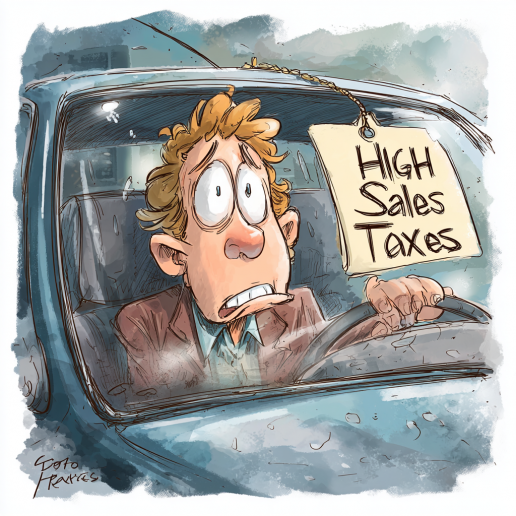
(Image source: Midjourney 2025 with inputs by P. Verbica.)
For more information: www.peterverbica.com
Paid for by Verbica for Congress.
For a family living paycheck-to-paycheck, that's not a minor nuisance. If a household owns three vehicles, their annual DMV burden alone could exceed a month's rent in many parts of the country.
And that's just one piece of the puzzle.
Californians already face the nation's highest gasoline taxes, some of the highest base prices due to reformulated fuel requirements, and a regulatory climate that raises the cost of nearly everything involved in transportation. But none of these are the real barrier that stops families, retirees, gig workers, and small business owners from buying a new car.
The real stumbling block — the one that freezes the entire purchase decision — is California's sales tax system.
I drive a Lincoln MKZ Hybrid with 130,000 miles on it. It has been a faithful companion through campaigns, commutes, and countless meetings. By any reasonable measure, I could justify buying a new vehicle. But I won't — not in California's current policy environment. And I'm not alone. Across our state, families, retirees, gig workers, and small business owners are quietly making the same decision: not to buy.
Why? Because California has created one of the most punitive cost structures for vehicle ownership in the nation. What used to be a straightforward purchase has become an intricate dance with sales taxes, registration fees, regulatory hurdles, and "use-tax" traps that hit honest consumers with a bill they never saw coming.
The "Punishment" for Buying a Car
Let's be candid: California has turned new vehicles — especially modest luxury or hybrid models — into a tax event rather than a transportation decision.
More on The PennZone
- American Properties Realty, Inc. Leadership Attends NAHB International Builders' Show in Florida
- $317M Revenue and a Clear Path to $1B: $IQST is Positioned for a Major Profitability Inflection
- ASI Hosts 2026 Executive Business Summit for Global Partner Community
- Pastor Saeed Abedini Releases THE TRUTH – Volume 1, A Deeply Personal Story of Faith, Struggle, and Redemption
- New Book Warring From the Standpoint of the Throne Room Calls Believers to Pray From Victory
When a consumer buys a car in California, they simultaneously trigger:
- Some of the highest sales tax rates statewide
- Steep registration and licensing fees
- Regulatory costs unique to California
- Insurance premiums inflated by the overall cost environment
That's not "supporting green transportation." That's discouraging mobility.
The Absurdity of Deterring Responsible Buyers
In my case, I considered upgrading. As a candidate for U.S. Congress, I drive thousands of miles across Santa Clara, Santa Cruz, Monterey, and San Luis Obispo counties. A newer, fresher vehicle would be a rational choice.
But I chose not to buy one — and not because I lack the means.
My MKZ Hybrid is running beautifully. It should easily reach 180,000 to 200,000 miles. Even if the hybrid battery eventually needs replacement — an estimated $3,000–$4,000 expense — that is dramatically cheaper and more practical than handing the State of California an additional $8,000+ in taxes and fees simply for choosing to upgrade responsibly.
This isn't frugality. It's rational behavior in the face of irrational government incentives.
The Deadweight Loss: When Taxes Become So High They Reduce Revenue
Classical economics teaches us about deadweight loss — the idea that when taxes or costs become excessively high, individuals simply stop buying. Everyone loses:
- The consumer, who is priced out.
- The business, which loses the sale.
- The government, which ironically collects less revenue than if it kept taxes reasonable.
Walk into a dealership anywhere from Los Gatos to Salinas and ask managers about foot traffic. Ask them about the slowdown. Ask them how many qualified buyers are delaying purchases purely due to the cost structure created in Sacramento.
California's policies don't just hurt wealthy buyers; they hurt the middle class, working families, car dealerships, union mechanics, and local tax bases. It's a perverse incentive structure that tells consumers:
More on The PennZone
- Scotch Whisky Market Dislocation Creates Compelling Entry Opportunity for Long-Term Investors
- Peccioli Becomes New Orleans: In July 2026, the magic of jazz comes to Tuscany
- $6 Million Funding Secured as Retail Expansion, Operational Streamlining, and Asset-Light Strategy Position the Company for Accelerated Growth $SOWG
- The "Unsexy" Business Quietly Creating 130+ New Entrepreneurs Across America — From Alaska to Puerto Rico
- Veteran Launches GTG Energy: Nicotine-Free Pouch as Americans Rethink Addiction, Focus, and What Fuels Performance
"If you're smart, you won't buy here."
And many are listening.
The Ripple Effect on Local Dealerships
Dealerships are often multigenerational family businesses. They employ:
- Salespeople
- Service technicians
- Detailers
- Administrative staff
- Finance workers
This is not environmental policy.
This is not consumer protection.
This is a politically engineered choke point on mobility and commerce.
When Government Becomes the Barrier, Not the Bridge
A government should encourage responsible purchasing — not punish it. It should incentivize:
- Cleaner vehicles
- Safe vehicles
- Efficient vehicles
- Local commerce
I would love to support a local dealership. I would love the benefits of a fresher hybrid or EV. But until Sacramento stops treating middle- and upper-middle-income buyers as walking revenue units, I will keep my MKZ Hybrid running for another 50,000–70,000 miles. And I suspect hundreds of thousands of Californians will do the same.
A Better Way Forward
California needs a policy environment where:
- Moderate, reasonable taxes encourage purchases rather than suppress them
- Hybrid and EV buyers are not penalized with contradictory fee structures
- Consumers can upgrade without fearing hidden penalties
- Dealerships can thrive again
- Families aren't pushed into keeping aging vehicles simply to avoid government overreach
The State of California may have forgotten how everyday economics works. But the voters haven't.
— Peter Coe Verbica
U.S. Congressional Candidate
Santa Clara • Santa Cruz • Monterey • San Luis Obispo Counties
Interested in making a difference? Support Verbica's campaign and help him fight for you in California and DC: Support - Verbica for Congress
(Image source: Midjourney 2025 with inputs by P. Verbica.)
For more information: www.peterverbica.com
Paid for by Verbica for Congress.
Source: Verbica for Congress
Filed Under: Business
0 Comments
Latest on The PennZone
- Bent Danholm Named "Top Luxury Real Estate Leader" in Modern Luxury Miami
- Author Ken Mora to Celebrate New Caravaggio Book Debut with Special Event at Palazzo Venezia Naples
- Matthew Sisneros Releases Raw and Unfiltered Memoir: The Devil Lost Another One — A Powerful Story of Crime, Consequence, and Redemption
- From Life to Light: Jess L. Martinez Shares a Soulful Poetry Collection That Explores What It Means to Be Human
- Lawsuit Filed Against Boeing Over Defective Seat Switch on Boeing 787
- Quadcode Acquires Significant Stake in Game 7, LLC - The Parent Company for FPFX Tech and PropAccount.com
- Danholm Collection Announces Sale of 16689 Broadwater Ave in Winter Garden, Highlighting Strong Performance in Twinwaters Community
- South Philadelphia Filmmakers Launch Fourth Feature Film on Amazon Prime Video
- Strong Clinical Results for Breakthrough Liver Diagnostic Platform; ENDRA Life Sciences (N A S D A Q: NDRA) $NDRA
- 46th International Symposium On Forecasting – Dates, Venue And Speakers Announced
- Phoenix Rebellion Therapy Celebrates 10 Years Helping Utahns Overcome Trauma as Utah Faces Nation's 2nd-Highest Rate of Mental Health Challenges
- Bonavita Luxury & Portable Lavatories Announces Rebrand to Bonavita Site Solutions
- Multi Location SEO Guide: Rank in Multiple Cities and Generate Consistent Leads
- Raleigh Emerges as a Key Player in Sustainable Fashion Innovation for 2026
- Notice: Hrm Queen Laurence I Assumes Crown Control & $317q Fund. 3bn Unopoly Shares Settled. Requisition Of Buckingham Palace & Windsor Castle Final
- 13 Full Moons of Black Dandelion Convergent Voice™ An Integration of Literacy & Wellness Symposium
- Yoga Retreats, Ecstatic Dance & Spiritual App launched
- Elder Abuse Case Against Healthy Traditions Owner Raises Questions As To The Dire Reality Of Abuse Against The Last Of The Baby Boomers
- Integrative Psychiatry of America Expands Access to Telehealth Mental Health Care in Pennsylvania
- Simpalm Staffing Services Launched its Refreshed Website for Remote Staffing Services